Tested Advice on Raising Happy, Independent Boys: A Conversation with Author Suzy Shaw.
Welcome to the MOB
Cheryl Bohn: Hi there, I’m Cheryl Bond and you are listening to the Mothers of Boys Survival Guide podcast. Motherhood is tough and this is a place where we get real about parenting and talk about all of it, from infancy through adulthood. This podcast is inspired by the book Mothers of Boys Survival Guide and today we are going to hear from the author and co-host Suzy Shaw- with tips and strategies directly from her book for tackling some of the most difficult issues of motherhood. Hey Suz!
Suzy Shaw: Hi Cheryl, thank you for joining me on this adventure of the whole Mothers of Boys, the MOB is what we call the Mothers of Boys, and the podcast is an important element of it.
Cheryl Bohn: Yeah, I mean I really wanted to do it because I have four children and I think when you’re raising your kids there are so many challenges and so many things that sometimes don’t get talked about. So I think the more that we talk about all the issues and we’re honest about them and we keep it real, the more that we can help each other and the other moms and the MOB community.
Suzy Shaw: I couldn’t agree more and I do feel that community is so important. Yeah.
Inspiration Behind the Book
Cheryl Bohn: Just supporting each other and learning from each other. So Suzy, your book is wonderful. It’s got so much in it. You break it down in a way that’s very easy to just pick up if you’re having one issue. It doesn’t matter what the age is. It’s you know from infancy through adulthood there’s a certain issue you can easily just pick it up and look at a section. There’s illustrations and it’s just very, it’s like a great resource book with lots of fun stories.
How did that come about where you broke it up that way?
Suzy Shaw: I wrote some things that I wished I had when I was raising my two boys. And I knew how tired I was at the end of every single day and so the chapters and the information are really bite size. They’re not incredibly long. You can feel as though you’ve accomplished something within a short little evening of reading.
And there’s also tips from me and then tips from what I call Sister Sense. Sister Sense are tips from my sister-in-laws. And I have eight sister-in-laws. And then my sister friends. So I would- got a lot of advice which I don’t think everybody, you know, has that advantage when they’re trying to raise kids.
I also- I call the boys in the story Ernest and Exuberance. I don’t use their real names because I feel like when you have more than one child they sort of get these personalities. And the older child, my older son, is Ernest and a quieter child and then Exuberance, who we also called sometimes “Me Too” because he was so determined to do everything his older brother did.- is Exuberance and was very, very busy and had a ton of energy.
Cheryl Bohn: Particularly when they’re close in age, I think they tend to, that second one, tends to really emulate the other one.
Suzy Shaw: Right.
Writing & Collecting Stories of the Boys Childhood
Cheryl Bohn: Suz, when did you decide to write the book?
Suzy Shaw: I have been collecting stories really even before I was married. I would send out a Christmas letter on April Fool’s Day because I never had time at Christmas time and it was a very funny sarcastic newsletter. And then when I got married and the kids came along, everybody had their own little, you know, a couple of paragraphs in my funny newsletter.
So, I really started after COVID writing the book and for inspiration I looked through those older newsletters to remember a lot of the stories.
Cheryl Bohn: I think it’s funny that your newsletters included not just the highlights, you know, we tend to send out notes and little things on cards about all the highlights and accomplishments of the family, and I think it’s really funny that you included the mishaps, too.
Being Honest About Raising Kids
Suzy Shaw: Well, you know, I’ve been called a “WUSIWUG,” which is What You See Is What You Get, and that’s just my personality. But I do feel as though especially at this time in our culture we have a culture with Social Media and Facebook and Instagram and TikTok where things are sugar-coated, and it appears as though people are having, you know, no issues at all raising their kids and they’re doing these fabulous things and it’s just not accurate. And I think it’s hurtful to the MOB and to motherhood to think that that’s the way it works. It is a roller coaster of a ride of up and down and, you know, you know that as well as I do.
Cheryl Bohn: Right. Yeah, and typically, everybody’s going through something difficult, at some point, and usually… it’s, you know, one thing I’ve always learned too, and my advice would be- don’t ever judge an age of a child that your child hasn’t been at yet.
You know, there’s a lot of people that have an infant and then they’ll judge someone in how they’re disciplining their toddler, or their middle schooler, or see something. And you think, “No No. Sorry. You can’t go there yet! You have no idea what that stage is like.”
Which, your stages in your book- you break down the different stages which also makes it very easy to read. What are those? How did you come up with those titles? What are those different stages that you break down?
Death Wish Stage (birth to age three)
Suzy Shaw: Well, the very early stage, up until about three, I call “The Death Wish Stage” because it seems as though they have a death wish. Yeah. And you’re just on a high alert, you know. Are they gonna, you know, let go of your hand or, you know, put something in their mouth they’re not supposed to? And, I remember the moment when my youngest was around three that we were at a family birthday party and I felt like, suddenly, I was able to finish a sentence! And I hadn’t been able to do that for five years!
Cheryl Bohn: Right!
Suzy Shaw: Right? And then I realized, “Oh He, Exuberance is now three! He’s safer- safer, not fully safe.”
Cheryl Bohn: Right.
Suzy Shaw: So, that first stage I called, “The Death Wish Stage.”
Boyhood – Elementary School
The next stage is Elementary School which was a lot of balls! It’s just like all the different sports and, you know, bats and balls, and stuff, and playgrounds and activities, and keeping them-keeping them busy. You know, a big part of that, and I even talk about that in the book is, I call it “The Three Legged Stool.” And that I felt as though I could solve 90% of the problems in my house with one of three things. And that was Food, Exercise, or Sleep. And so, during the day, you know, somebody would start to fall apart and I’d be like, “Can I get you a snack? How about -how about an apple? Maybe lunch? It’s lunchtime, look at that!”
And then, then the next thing would be Exercise and for, you know, little kids you don’t have to overthink that. I used to have the kids race around the house. And, so, I would just go sit on the steps of our house and pull out a watch and say, “Okay, I’m going to time you. Let’s see who can run from here to there faster. Ready! Set! Go!” And off they would go. And that would get all that energy out.
And then when that didn’t work, if it wasn’t food, if it wasn’t, you know, exercise, then it was time for a nap or to go to bed and we’ll just start over again tomorrow. Because there are some days you’re just not going to win.
Cheryl Bohn: Yeah, you’re keeping it simple, that keeps it simple, right?
Suzy Shaw: And, you know, for the vast majority, even when they got bigger, you know, really 90% of the issues I felt like I could handle with one of those three things.
Man Cubs (Man-size but Still Immature)
And then when the kids got older around Middle school, High school, I called them “Man Cubs”, because they’re “Man Size.” Suddenly, right, they’re looking you in the eye, but mentally they’re still a little kid, and they just don’t make very good decisions. And when, especially when the hormones start, you know, coming into their body, they just become stupid. And, and that -that took a long, you know, that was a long period – Middle School, High School. You know, really off into Young Adult.
Cheryl Bohn: Yeah, that it is true because you do look at them and they look mature. And they look big, but they’re not emotionally there yet.
Suzy Shaw: No, no.
Cheryl Bohn: No, it’s so true.
Becoming a Submarine Parent
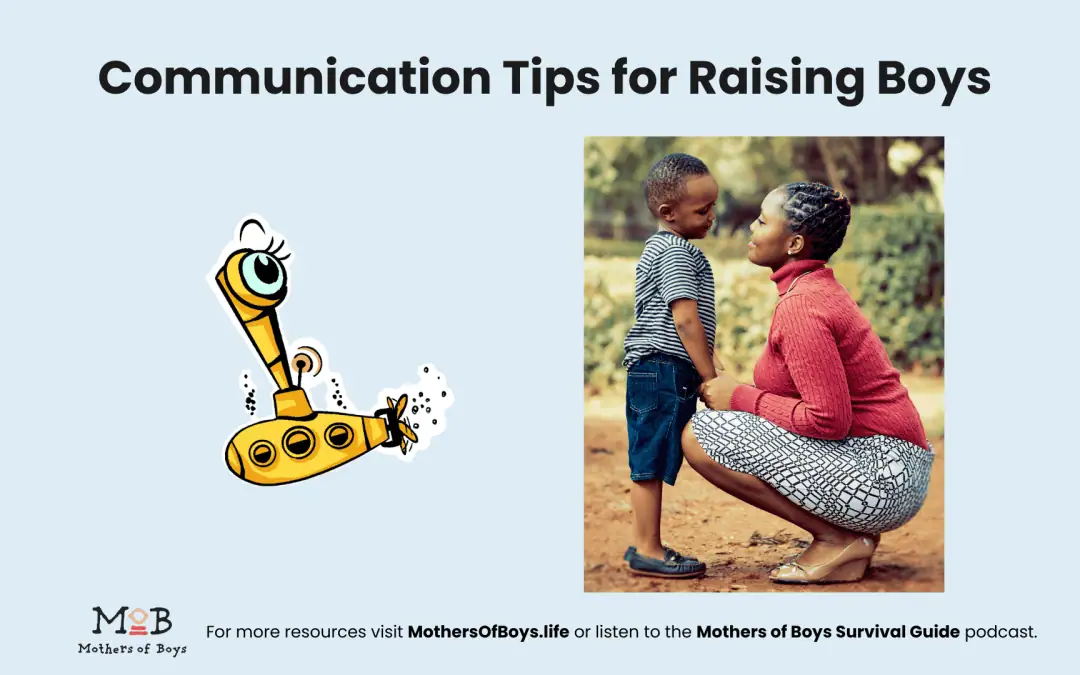
Suzy Shaw: And, I changed significantly how I parented during that time. And I called it being a “Submarine Parent,” because I did not, you know, I worked, and I was juggling a lot of things and so I did not have the energy to be a “Helicopter Parent.” I didn’t have the time, it just wasn’t in my DNA. So instead, I floated beneath the surface. And I put up my periscope. And I watched. And I pinged their location. And I collected intelligence from the MOB. And then on rare occasions I had a full breach, and I came up out of nowhere and pulled everyone back into compliance.
Cheryl Bohn: Well, I love that- that sounds like a really good balance between Helicopter Parent and, you know, being not caring and neglectful. So, you’re kind of letting them make some mistakes, fall, get back up, and then- just coming in for the rescue when it’s most needed.
Letting Kids Learn From Adversity
Suzy Shaw: Exactly. And I think that’s really really critical for, you know- my husband and I had a goal of letting the boys, letting them fail while they were at home with us. We didn’t want them to go off into the next stage of life and think that everything was easy-peasy and they could, you know, they could do everything that they set their mind to because that’s just not reality.
And, in fact, my husband, who I call “Hon” in the book because we live close to Baltimore and ”Hon” is a very Baltimore nickname. He had a philosophy that he called”Fail Fast”. And that is to, you know, get out there, do it; if you fail, recognize that you failed, and then take a step back and try to figure out what you did wrong and correct it; and really take advantage of those learning opportunities.
Cheryl Bohn: They say that success is based on lots of failures. So, I mean, that is very logical, good solid advice.
Suzy Shaw: And there are plenty of opportunities for failure. And it also helps to give you a sense of humor during that period.
Cheryl Bohn: Plus, I mean, the kids get confidence if they fail and then they get up and they try it again and it’s a way of building confidence, allowing them to figure things out on their own.
Suzy Shaw: And in a previous podcast, we talked about that with a Coach- about the lessons that, you know, boys and children learn from participating in group sports. And that getting back up and doing it again and becoming successful. (In Their Corner: Youth Sports, Coaches and Parents)
Cheryl Bohn: So that’s High School. What do you have after that? Do you cover another stage in the book after that?
Suzy Shaw: I do. I call it “The Remarkable Transformation,” because, just when you think you’re looking at your 22-year old, and you’re like, “They’re never going to get it. They’re never, it’s never, it’s like, Come on, it’s time for this to click. It’s time for you to get a job and become an independent person and pay your own bills and pay your own phone bill.” I mean, really, when they get off your car insurance and your phone bill, you have really, it’s a windfall cash-wise. And so that remarkable transformation suddenly occurs. And it almost happens overnight and you’re nearly shocked that it finally has occurred.
Cheryl Bohn: Yeah, I know. Everything seems to click all at once.
Suzy Shaw: Right. And that’s, you know, young adults in their middle 20s, I would say, you know. For my boys, it was around somewhere between 22 and 25 is when they really sort of got their act together and figured it all out.
And then as parents, you know, we have to figure out how to navigate “Empty Nest.” To go from a disorganized house, and a loud house, to a much quieter house, you know, without all this extra mess and craziness.
Cheryl Bohn: Yeah. Well, you cover so many different topics. And, I know one thing that you do talk about in your book is just the community, the support around you, which is so important. And, you know, you have the book and then we have this podcast, can you talk a little bit about what the MOB community is to you?
Suzy Shaw: Yeah, absolutely. So this podcast is part of it. And the podcast is where we get to, you and I, as a member, as moms, get to ask questions of professionals and other experienced moms for suggestions and real talk and humor and expertise on a topic.
Cheryl Bohn: When you were raising your kids, what did the MOB community teach you?
Suzy Shaw: You know, I felt like I couldn’t have survived without the MOB. And the MOB isn’t just, you know, “Mothers of Boys.” It’s just mothers, parents, mothers, and fathers, parents, you know, even neighbors. And, you know, just being able to ask people that you trust for advice and help because it’s difficult to do it alone.
And, you know, I had a husband, but he was off at work and traveled a lot. So, there were lots of times when I was trying to figure it out by myself and I would be late at work and I’d have to call up a member of the MOB and say, “Hey, can you pick up somebody from school and take them to your house and, you know, give them a snack?” I mean, really anything.
A College Care Package Party
And it brings to mind and I have it as a tip for when our oldest boy, Ernest, went off to college, we had a party for the parents. And I went to the Post Office and I got Priority mailboxes and I contacted, I don’t know, six or eight different parents that were the same age as Ernest and I told everyone to bring eight of one thing. So, and, we’re going to make these care packages. And, so one parent might have brought gummy bears and somebody else brought Hot Pockets and, you know, whatever..
Cheryl Bohn: Oh, that’s so fun!
Suzy Shaw: Yeah, you know, all these different things. And they came to our house and we had a pot of chili and, you know, a couple of beers and drinks, and we sat around and talked. And, even the men came, right? And we talked about how weird it was to have our child, you know, go off. And we put all these gifts into the box.
Cheryl Bohn: That’s very emotional. Your child going off to college or leaving the house for the first time is a very emotional time.
Suzy Shaw: It is.
Cheryl Bohn: That’s such a great idea, Suzy! I love that!
Suzy Shaw: It was really helpful. And then we took a picture of everybody and I printed it out and said, “Love from your community,” and we stuck it in the care packages and we sent it off. And, the kids were so receptive, and they knew that this bigger, larger group of humans, you know, not just their parents, was out there. Their friends, you know, their friends’ parents, too. And that we were all supportive of them. And, you know, “Go do it. We believe you. Get it done.”
Cheryl Bohn: Yeah, I love that idea. I was friends with you back then. I don’t know why you didn’t tell me about that.
Suzy Shaw: You didn’t live close enough.
Suzy’s Final Words: You’ve Got This!
Cheryl Bohn: I know when we do our podcast, you always ask our guests what their mantra is. So, I’m feeling like I should ask you that. Do you have a mantra as it relates to the MOB community?
Suzy Shaw: I do. And we actually say it at the end of each podcast. And that is – Be kind to yourself! And I truly mean that. And that was one of my regular responses in texting with MOB members, is, I think as mothers, we’re really hard on ourselves. And we have to remind ourselves to be kind to ourselves, you know. Don’t treat yourself worse than you would a friend, you know. So, be kind to yourself would be the motto.
Cheryl Bohn: It’s something that you just have to keep practicing, because for some reason it’s hard. I don’t know why it’s so hard, but it’s like, a practice.
Suzy Shaw: So I would like, before we wrap this up, to truly ask everybody for their participation. So, it makes a difference. We want to create a community. And you can go to MothersOfBoys.life is the website and sign up for the mailing list.
I would also appreciate it if you would follow all of the Social Media sites, which is Facebook and Instagram and YouTube are the primary sites. The podcast is available on all the different podcast platforms, so you can follow that as well.
And one of the things that will help the most is to review the book. If you’ve read it on Amazon and Barnes and Noble and Goodreads, just a sentence or two.