Tips for Teaching Young Boys to Use Their Words: Advice from an expert.
Suzy Shaw: Hi everyone, and welcome to the Mothers of Boys Survival Guide. I’m your host. Suzy Shaw, boy mom, author, and firm believer that parenting is equal parts comedy, chaos, and hugs. Today, we’re talking about something every parent of boys has struggled with at some point, and that is communication. Why do our sons sometimes shut down, shrug off emotions, or seem to speak in grunts, especially when they’re teens? And more importantly, how can we help them find the words for what they’re feeling?
My good friend and co-host, Cheryl Bohn, joins me today for this podcast. Welcome.
Expert Introduction: Dr. Gloria Vanderhorst on Child Development
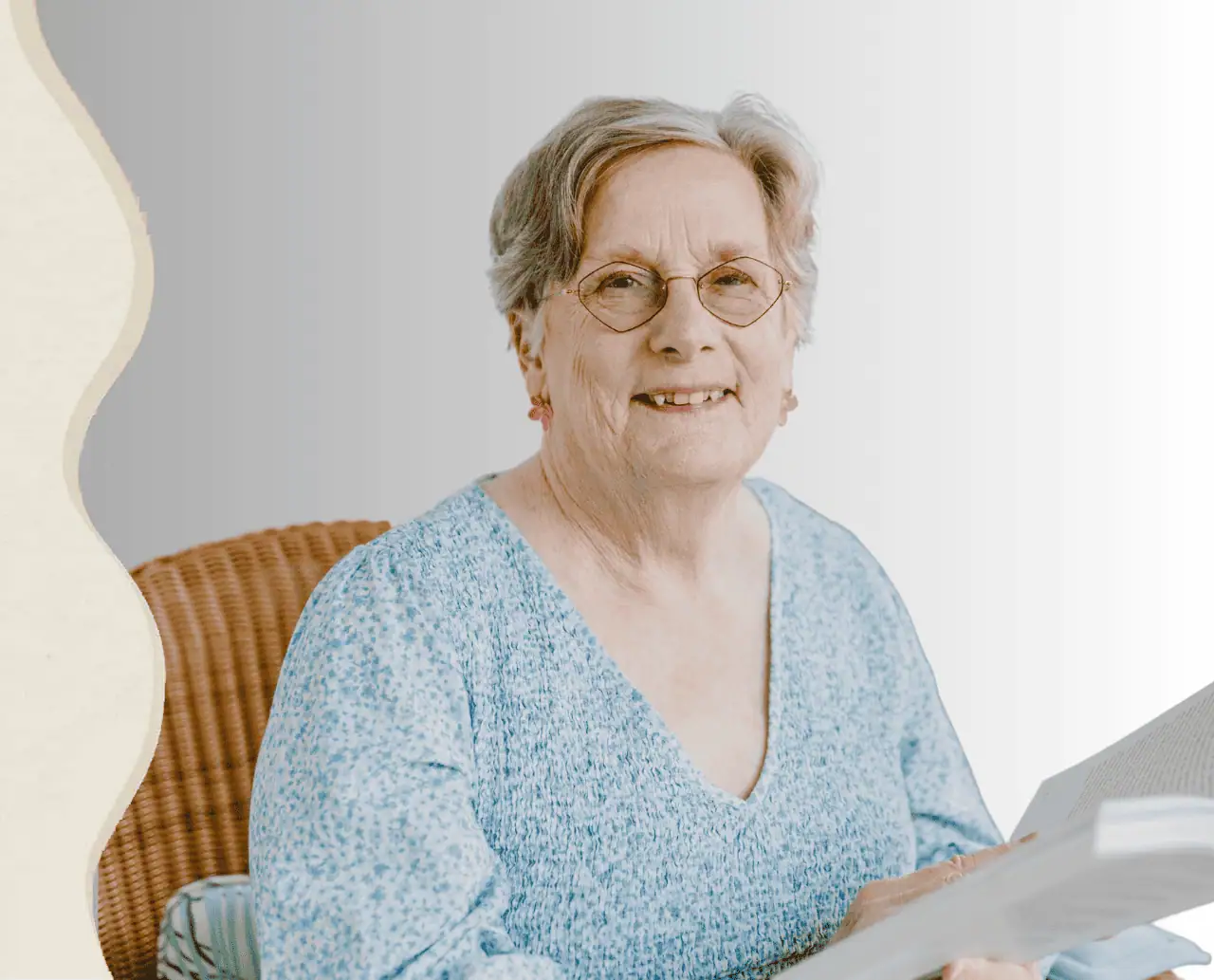
Cheryl Bohn: Hey, Suz. Our guest today is Dr. Gloria Vanderhorst, a psychologist whose career spans nearly five decades, working with kids, teens, and families. Gloria began her career and her work with preschoolers, mostly boys, after noticing how often young boys were misunderstood in the classroom. Over the years, she’s helped thousands of families bridge gaps through her training in emotion-focused therapy and internal family systems.
Understanding How Young Boys Communicate Differently Than Teens
Suzy Shaw: Since communicating with little boys is so different than communicating with teens or, as I call them, “man cubs” because they are man-sized, staring you in the eye, we’re splitting this topic into two episodes. Today, we’ll focus on our younger boys, and next time we’ll dive into effective communication with teens.
Welcome, Dr. Vanderhorst and thank you for joining us.
Dr. Vanderhorst: Well, thank you. I am delighted to be here, and to focus on this particular topic is so important.
Cheryl Bohn: Dr. Vanderhorst, would you like us to refer to you as Dr. Vanderhorst or Gloria?
Dr. Vanderhorst: You can call me Gloria. That’s very familiar.
How Early Experiences Shape Boys’ Emotional Skills
Cheryl Bohn: Well, I understand that you are a licensed psychologist, author, mom, and grandmother. Please tell us a little bit about yourself and your commitment to mental health.
Dr. Vanderhorst: Well, I came into psychology from a very unusual direction. I was a Midwestern tomboy, and I wanted to do everything my brother did, but I also wanted to grow up to be a math teacher. That was my goal. I was on track until my junior year when I ran into a teacher in Calculus II, and I had to take off to go home for Christmas break. I sent a friend to check her door to see the grade that I received at the end of the semester. The friend comes running across the parking lot, yelling at the bus as it’s leaving the bus station, screaming, “you got a D, you got a D,” and I went, “Yes! I never have to take Calculus II again!”
And in my head and then in actuality, I immediately flipped my major and my minor, and my minor was psychology, but I have never looked back. So that’s a situation where life has just used a circumstance to point me in the right direction, and I have loved it ever since.
Suzy Shaw: The pivot, right? Isn’t that what we all do these days, especially after COVID?
Dr. Vanderhorst: Right.
What Research Shows About Boys’ Emotional Needs
Suzy Shaw: And I think parenting is very much about pivoting, and you know, when I was a young mom, I was really struggling to find better ways to talk with my two boys and they were about two years apart and I watched a documentary called Raising Cane Exploring the Inner Lives of America’s Boys and it had a huge impact on me.
One of the first scenes in that documentary is an experiment they do with infant boys and girls when the mother, you know, interacts with them and then she ignores them, and the babies are about five months old and the reaction of the boys to the mom not giving them attention was very significant. It would make them agitated and upset, which was very different than the majority of the girls, and it struck me at that time that my boys, when I was trying to talk with them and multitasking, which is something you know I did as a mom.
Dr. Vanderhorst: You normally do as a mom.
Suzy Shaw: Right? They would literally grab my face and try to talk to me and so I had to learn how to sit down listen to them repeat what they said so they know that I heard them and then typically I could I could say “no” or say whatever my answer was, but you know what is your take on you know that that memory of mine and that experience of mine?
Boys Are Born With a Wider Emotional Range Than Girls
Dr. Vanderhorst: That memory is right on target with the research about the emotional characteristics of boys and girls. Boys come into the world with a broader range of emotional expression than girls do. Now, I’m going to say that again. They come into the world with a broader range of emotional expression than girls do.
By and large, our infants interact with females from birth to young school age. Mothers, nannies, and most of our caretakers are females. That’s changing now. There are more and more men staying home raising boys, and I will tell you that will make a significant impact on the emotional development of those boys. But without knowing it, right, mother reacts to the higher range of emotional expression and the lower range that boys are capable of with responses that are teaching them to abandon those ranges.
How Caregivers Accidentally Limit Boys’ Emotional Expression
So, you were, without actually realizing it, we are narrowing their capability in infancy, and basically, we’re sending two messages, right? One message is don’t go that high, don’t go that low. But the other message, because we’re sending that first one, is that your feeling states make me uncomfortable, alright? So that broadens it to absolutely any and every feeling that your boy is going to have. So that gets planted in your sons in infancy, your feelings state, as a boy, make me uncomfortable.
So think of the impact of that as your boy grows up, alright? That’s the rule that’s in his head from infancy. It’s mind-blowing.
Cheryl Bohn: Can you give us a specific example of that?
Dr. Vanderhorst: Absolutely. (In a behavior?) Absolutely.
Real-Life Example: How Boys Express Emotion in Early Childhood
Let’s, I can give you multiple ones. I’ll give you one I’ve observed personally in the experience of mother-infant dynamics, right? So sometimes in doing therapy, a mother will have an infant and not be able to have anybody take care of the infant. She’s going to bring the infant into therapy. That gives me the opportunity to observe this interaction. And so in a situation like that, where the mother brings her infant boy into therapy, I get to watch how she interacts with that boy and how he responds to the interactions.
So when the boy starts to fuss, as it would be normal, right? It’s hard to sit in a single place, and she can’t; she doesn’t do anything but hold him. She’s not going to do much else in a therapy session. But when he gets uncomfortable or wants more of her attention because she’s talking to me rather than paying attention to him, he gets intense. Mother gets really uncomfortable with that intensity, right? Her facial expression changes to, ooh, I don’t like that. I don’t know what to do with it, right? You’re out of control and I don’t know how to get you back into control. And so you can see that dynamic.
Watch mothers and toddlers interact. In a park situation, the boy gets either frustrated or hurt or gets into a struggle with another child, comes to mom crying, fussing. Mom asks, “what happened?” If he gets a good enough response, she’ll provide comfort. Little girl, same age, same situation, frustrated, gets into a struggle in the park, crying, comes up to her mother. The little girl gets picked up and then asked, What happened?
Go to any mall, go to any park, watch this interaction. It is common. We treat boys and girls differently from day one. So we have to expect that the boy is going to pick up on that social difference. It is going to be internalized because we’ve sent a message. We are not interested in your emotional life. All right? And then we put them into school situations, family situations, where we actually tell them we’re not interested in their feelings. Stop crying. Don’t be a sissy. All right? Think of all the language that gets used against little boys. We train them to abandon their emotional lives.
Cultural Messages That Shut Down Boys’ Emotions
Suzy Shaw: And I would say that was the big impact that changed me after watching that documentary with all that messaging.
Cheryl Bohn: Yeah, well, as if we’re assuming that the boys don’t need as much empathy as the girls do because they’re just tougher emotionally or something. We’re making this assumption that they don’t need the same amount of emotional support.
Are Traditional Expectations for Boys Still Healthy Today?
Dr. Vanderhorst: I do want to acknowledge that this has social value to it. It has always had social value to it. So if I’m a cavewoman, I want my caveman to be brave, courageous, right? I don’t want him sniffling. I don’t want him crying. I don’t want him to be shy. I want him to pick up that spear, go out there, kill something, and bring it back for us to eat.
And that historically is the way that we have used men culturally. They go fight for us. They protect us. They feed us. Right? They keep us alive. The question that I would have is, is this process still adaptive for our culture? If you look at moving forward, how the culture is evolving, the equality in work relationships between men and women and their capabilities. If you look at artificial intelligence and how that’s going to change the dynamic, we should be very active in giving men more access to the full range of their feelings. And that starts with little boys.
Cheryl Bohn: Well, I have four children, three girls and one boy. And can you talk to us a little bit about how boys and girls communicate differently with their, you know, their communication skills?
How Boys Learn Through Their Bodies, Not Language
Dr. Vanderhorst: So one of the things that we know about boys is that, for some reason, developmentally, they are behind girls. So girls are ready to go to school, sit in an organized classroom, and follow directions. Boys are not at that same age. All right. They need to be climbing trees, running outside, playing with trucks, building things, and discovering things. They need to be bumping into each other.
And so we put them in preschools, right, with other boys and other girls. And they do that anyway. Right.
Cheryl Bohn: Yeah, I love that. You just said that, bumping into each other. I think that’s really funny.
Dr. Vanderhorst: They bump into their neighbors and, you know, they pull on them.
Cheryl Bohn: They need contact with something. Or if it’s not bumping into something, somebody, it’s hitting a wall or hitting something high up or jumping.
Why Boys Struggle in Traditional Classrooms
Dr. Vanderhorst: So girls use language and boys use their bodies. Girls discover the world with language. Boys discover the world with their bodies. And so we could change the structure of how we school boys and girls by really respecting that we need to have a path for boys where they can bump into each other, and they can climb trees.
Most classrooms don’t accommodate that reality, right, that the boy needs to bump, needs to touch, isn’t going to sit in the circle and listen to the story. He needs to be able to move and walk around. If he could walk around and listen to the story, that would be great. But the teacher wants him to sit. All right. And unfortunately, the majority of those teachers are females and don’t quite understand what’s happening with this boy.
I mean, the reason I started seeing preschool boys was that the teachers are female. The boys want to move around, and the teacher thinks that indicates there’s something wrong with the boy. Maybe he has attention deficit. So let’s go have him be tested. So that’s how my practice started with all of these preschool boys is that the structure of the classroom does not accommodate the needs of the boy.
Is It ADHD or Just B.O.Y.? Understanding Boy Behavior
Suzy Shaw: You know, when my boys were, I would get that feedback because I, two boys, and I would always ask the teacher, “how do you know it’s ADHD and not B.O.Y.?” And they would look at me like, “What do you mean B.O.Y.?” And I’m like, they’re boys. I mean, it looks like B.O.Y. to me because I grew up with a brother.
Dr. Vanderhorst: I absolutely love it. Yes. And there we need to make that shift. Right. So we’ve already limited the emotional range of expression. And now we want to limit the body’s range of expression. And we’re just undermining society as a whole when we do that.
Suzy Shaw: Right.
Cheryl Bohn: What do you think would be some steps in getting, making some progress there in the classroom?
Dr. Vanderhorst: I think there are really good pieces of research and information out there to change the structure of the educational system so that it does meet the needs of boys and meet the needs of girls. I don’t mean completely separate. Right. I think these children should have the opportunity to interact with each other, learn from each other. But I think there should also be a clear separation and lots more opportunities for large muscle activities for boys while they are learning things.
Why Movement Helps Boys Learn Faster
It’s hard for a preschool boy to sit in one place and have his brain actually focus and pay attention. We miss the reality of preschool boys. If they can move around, they’re still paying attention. Right. And things go into their brains more easily if they can move rather than having them sit still. So that’s it’s powerful… We hold things in terms of sight, sound and action. Those are the three ways that we represent the world. Boys represent the world more often in terms of action. So give them that opportunity in a preschool, and they will be learning at a much faster pace than requiring them to challenge themselves to sit in a circle and listen or respond. It’s just too hard. It’s too confining. We should change preschools so that we’re not doing that to little boys.
Helping Boys Use Words Instead of Physical Reactions
Suzy Shaw: We did change schools on occasion a couple of times when the boys were little because things weren’t working. And I found when the boys were frustrated that they would react physically. They would stomp their foot. They would hit each other.
Dr. Vanderhorst: Yup, they’d use their bodies.
Suzy Shaw: Right. And it was a struggle to help them find their words. And there were times when every mom had a child meltdown, typically in the grocery store because they wanted something that they can’t have. And I wrote about that in my book. I call the boys Ernest and Exuberance.
Dr. Vanderhorst: Right. I know.
Suzy Shaw: Exuberance was the younger boy. He was having a full meltdown, lying on the floor, banging his fists on the ground. And I had a philosophy where I tried not to pour gas onto a fire. So I didn’t want to add more energy to an already energetic situation like that. So I literally stood over top of him and said, “is this working for you? Are you going to get what you want because you’re laying on the ground behaving like this?” And then I just waited, and he lay there for a moment. And then he started saying, “it’s not working.” “I’m like, well, then maybe you should get up and try something else. Because this form of communication is not working for me.”
So, you know, what suggestions do you have for moms in those, you know, little boy meltdown, you know, situations of frustration and then they’re tired and everything else?
The Power of Getting on a Boy’s Level Physically
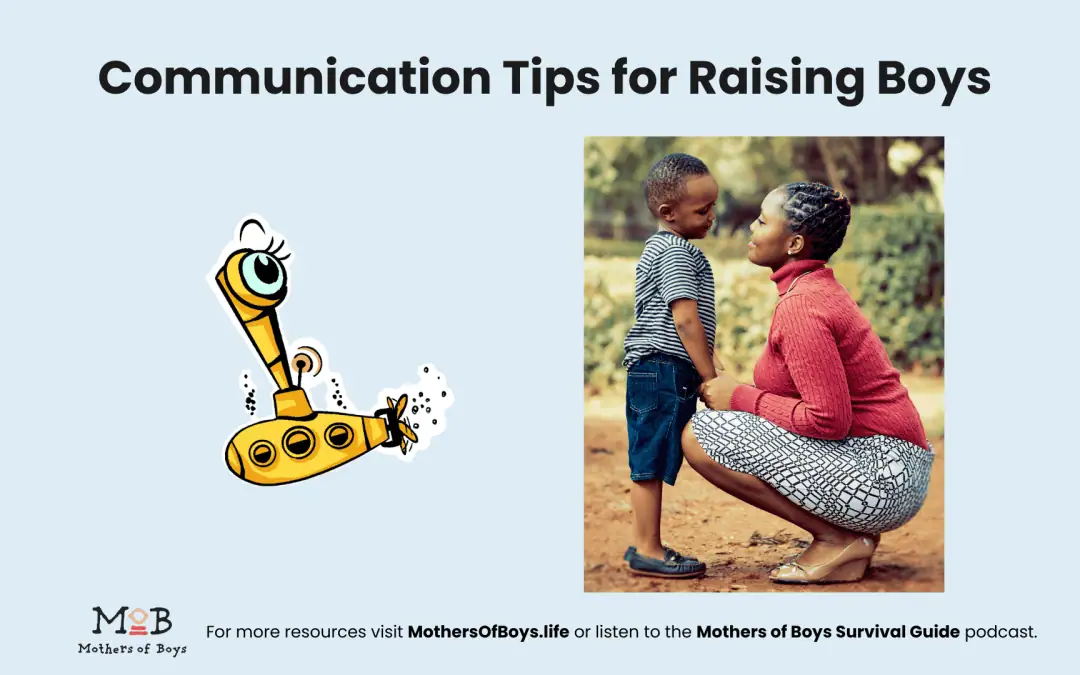
Dr. Vanderhorst: I love the way that you did it. If I could modify it in any one way, I would have you sit on the ground. Right? (Right.) So being at this on the same plane, on the same physical level as that child is really important. So, you know, if he’s sitting in his bed, sit on the bed, sitting on the ground, sit on the ground. All right. If he’s up here on the higher bunk, you know, lift yourself up, get your butt up there.
The closer that you can be to their physical experience, the easier it is for them to relax, to feel a sense of safety and to identify with you. You become much more important. Think again, boys are physical, right? You’re functioning in a very physical world. So the more you can join that physicality, the safer they are.
And we interact with others from a position of safety. That is so powerful for all of us, but it’s critical for little children. It’s very, very important for younger boys, because as I’ve just, you know, pointed out that we don’t create safety for them. So they’re a little on edge kind of all the time anyway. So we have to raise our consciousness about the power and the importance of safety for our little boys.
Long-Term Impact of Teaching Boys to Hide Emotions
Cheryl Bohn: That’s great advice. Wonderful advice. I’d like to touch on something you mentioned previously, which was… when I grew up, I had four older brothers and, you know, we’re all much older. So the generation that I grew up in was very much, you know, my father would probably say to my boys, you know, toughen up or stop crying or shut them down. Boys don’t cry. (Pull up your pants.) No, it’s right. Yeah. There weren’t any; you weren’t really supposed to show emotion. Right. You know, my father lived until he was 91 and still felt that way, you know, into his old age. If my brother went to touch his hand, he’d push him away. (Right.) You know, like, you know, don’t he couldn’t it was too emotional for him. So what, you know, what do you think are the long-term effects of that approach for our boys?
Dr. Vanderhorst: Well, you just described it right. And we know factually that men have more physical problems than women as they age, more heart disease, more diabetes, and more overweight. OK, these are all a function of not being able to identify the feeling that they’re having to be able to find a way to express that feeling. And if you will allow me, our jails are full of men, not women. Our jails are full of men because they cannot talk about their feelings or issues. They use their bodies to express something that they’re feeling internally. And, you know, if you’re going to use your body to hit somebody, shoot somebody, push somebody, you’re eventually going to end up in jail.
Why Moms Matter: Raising Emotionally Healthy Boys
Suzy Shaw: As a mom, I always felt this was my opportunity to put good men into the world. And one of the reasons that I wanted to do this podcast was to have the ability to talk to people like you and give more tools to moms to put better men into the world.
And I’d like to just touch briefly on, and you’ve brought this up, but there the lack of females in the elementary school system and what that really means. I mean, I remember there was a teacher who was trying to punish one of the boys for not getting all their morning work done by keeping them in for free play. Right. I mean, let’s just turn a bad situation worse. And he came home and he’s like, “yeah, I’m not I’m not going to school anymore. You know, I’m done.” (Right.) And so I had to go in and advocate and arrange another option for the teacher… and that was Ernest, who really was not my aggressively active child.
Exuberance was ready to bounce off the walls at all, you know, given points. And by third grade, he and his teacher were not having a very good experience. And I knew that they had a couple of male teachers in fourth grade. And so I went in and sat with the counselor and said, You have just got to give him a male teacher. He has not had a teacher that truly understands him. And he needs somebody that gets him. And that turned him around in fourth grade. And, you know, the teacher would let them all wear their favorite team, you know, sweatshirts on game days and football. I mean, it was really simple things, but it was it was a huge, huge difference. What advice can you give to moms, you know, in that?
The Importance of Male Teachers for Elementary-Age Boys
Dr. Vanderhorst: I love the fact that you advocated for your son to be placed with a male teacher. It’s really important that at that level of preschool, first grade, elementary school, that we work harder to get more men interested in that profession. And that we understand how important it is for boys to have male role models that are interested in something other than sports. They get plenty of male role models that are interested in sports and crashing into each other. But they don’t get enough that are really interested in academics and exploring intellectual interests. So I would love to see preschools modified and elementary schools modified so that there are more opportunities for boys to have male models.
Suzy Shaw: As as my boys got older in elementary school, heading towards middle school,, the windows, when they were willing to actually talk, were were smaller. And I had to learn how to talk with them on their time and not my schedule. (Right.) And so, you know, for Ernest, I found that he would open up right before he would go to bed. Exuberance would just burn himself out, crash, and go to sleep. But Ernest as he relaxed, he would be willing to talk. And so my husband and I would take turns going in and talking with him at night and just lay in bed and, you know, talk with him about his day. And he was willing to postpone going to bed. And and talking right with us. It was kind of a win-win.
Another place that worked well was in a car, especially if you were in the car with him by yourself, either both boys or but, you know, what tips do you have for parents to strengthen those opportunities to communicate?
Best Places to Talk With Boys: Car Rides and Bedtime
Dr. Vanderhorst: Well, you’ve just identified the two locations that are the very best for developing conversation with boys. The reason they’re the best is that both of those tend to put you in a position where you’re not facing each other.
Definitely in the car, you’re not facing each other. So the boy is much more comfortable in sharing because he’s not reading body language. (Right.) Typically, in bed, you’re either lying next to each other. You’re sitting in a chair and they’re on the bed. So you’re, again, not facing each other. And so, with all of this information, we know that- what is it- 90% of communication is nonverbal. It takes place in the way our face expresses. Our body moves me. I’m a hand mover with communication.
And if the child does not have that distraction, they are much more able to focus internally and describe what their internal experience is and what they’re thinking and what they’re hoping and what they’re dreaming about. I say, you know, make a regular habit of doing either the bedtime or the car. Make an excuse to put your child in the car because that’s a healthy conversation that takes place in that time. So structure it, be aware of it.
If you have a project that you’re working on where you can be helpful, supportive and you’re not facing each other, that’s another great opportunity for conversation. I will tell you, boys that I have worked with talk about helping their dads do some project around the house and just knowing that that is a time that dad will listen to them, that they can talk, that they can share. Right. But they’re not facing each other. Just way too much.
And if you think about it, so I’ve robbed the boy of being able to express emotion, but I have not robbed him of being able to read emotion. And in fact, because I’ve robbed him of being able to express emotion, I have probably increased his sensitivity to processing emotion. So he’s reading all of the nonverbal signs for me, just as he did as an infant. And he’s deciding whether to take the risk of communicating based on those nonverbal signs. And that’s why, you know, when you said earlier, if you’re washing dishes, all right, and your boy is trying to talk to you, that’s why he comes over and grabs your face. Right. Right. And says, “hey, look at me. “
Another thing that I encourage families to do is to have a list of feelings and put that on the kitchen table because your brain can recognize what you feel even when you can’t produce it. So if you scan through a list of feeling words, the list will just have a word pop out. You’ll be able to identify it immediately. And that’s a great tool for families to have a feelings list on the table.
Cheryl Bohn: That’s a great idea. I know I, you know, having four kids…It was hectic and busy and working and I would try to. So I had one son, and actually, he was a very good communicator at a very young age and talked a lot.
Suzy Shaw: Well, he had three sisters, right?
Building One-on-One Time With Busy Kids
Cheryl Bohn: Three sisters, yeah. So, I would try to, and I was really glad I did this. I would try to take like one day with just each child. And a really long day into the evening. And sometimes I would even try to do an overnight somewhere just so that this was time to completely…My mindset was I’m going to talk about whatever they want to talk about. I’m not going to stop them from talking. I’m not going to limit how much they talk, because that’s another thing. You know, you can easily get impatient with a child that keeps going on and on and on. But they have they they have all this energy and have so much to say. So that worked for me. And I felt like it was a really good time to really connect and communicate with each of my kids when I would just take them one-on-one for an extended period of time. It wasn’t very often because it’s hard to do.
Even Small Increases in Connection Time Matter
Dr. Vanderhorst: It’s hard to do but that’s brilliant. Even as you said, if it’s just an extended time in an evening. All right. So maybe you don’t have, you know, a 12-hour opportunity. But if you moved it from 20 minutes to 40 minutes, that’s huge. All right, particularly for a boy who is not used to having his feelings be important to someone else. We’ve trained you. Your feelings are not important. I’m not interested in them. You box them up and don’t bring them out.
Cheryl Bohn: What kind of resources would you recommend right now that are that are out there that would accept we extend this topic?
Recommended Books and Resources for Raising Boys
Dr. Vanderhorst: Oh, that this is a really good time because if you look at books about fathers, sons, boys, you will find that there are lots of them out there now. Right. Just go on the internet, go to Amazon, plug in, you know, books about boys. 20 years ago, there would have been zero. Right now, there are probably a couple of dozen that pop up good, helpful books, many of them written by fathers who have this same concern. Right. Why doesn’t anybody know about raising boys and helping boys to be more socialized, actually, more emotionally available?
Why Moms Also Need to Model Emotional Openness
The other thing I would say is that we also need to train women because even though women say, Gosh, I really long for my husband, right, to be more emotional or more expressive. The truth of the matter is, when he comes home from work and you can tell he’s unhappy, you may ask what happened? He will give you a little bite. Right. Well, I was up for a promotion, and I got passed over. Do you know what she will say? “I’m so sorry. I know you’ll get it the next time.” Not sit down. Tell me more. Right. I want to hear the whole story. I want to know how this is impacting you. She doesn’t go fishing for a deeper emotional connection. And that’s limiting to the relationship. So we also have to train our women to be able to take a deeper dive with their husbands and not do the gosh, I’m so sorry. Right. And Joe didn’t deserve it. You should have had it.
Suzy Shaw: Yeah. Well, and model. Right.
Cheryl Bohn: We’re responding probably differently than we would if we were with our girlfriends. And that happened to our girlfriend. Absolutely. It would be a three-hour lunch. Just…
Dr. Vanderhorst: It would be an extended lunch. My hair would be canceled so that I could pay attention to you. But with our husbands, we have to get back to the kitchen and finish dinner. We have to get back to the computer to finish writing.
Suzy Shaw: You’re going to make us better spouses and better moms. So thank you.
So, Gloria, at the end of all of our podcasts, we ask our guests to share a quote or a mantra or sort of a guiding thought that a mom can say to herself, you know, while she’s dealing with the topic, which is today, you know, communicating with a younger boy and her son.
So, what would you have to say to that?
Three Mantras for Raising Emotionally Healthy Boys
Dr. Vanderhorst: I think I would put out three possibilities. First, just recognize that your boys are different. And that’s a good thing. Second, know that society has shut down their range of feelings, and that is so hard for a boy. And third, really spend time with your boy in ways that give him the opportunity to engage in conversation.
Your little girl, all right, she’s going to start yammering right away. Your little boy, you’re going to have to take a breath. Be a little more patient. Be willing to invest the time, and you will be rewarded with a much stronger relationship.
Cheryl Bohn: Well, we’ve heard some great advice from you today, and I feel like we just tipped on the whole conversation. I do feel like we could talk for hours and hours about this topic.
Dr. Vanderhorst: I could go on for hours. Sorry.
Cheryl Bohn: I know. I think what you’ve said to us today has helped us all become better moms to our boys, just with what, you know, the small amount that we’ve talked about today. So thank you so much for that.
Dr. Vanderhorst: You’re welcome.
Sneak Peek: Next Episode on Communicating With Teen Boys
Cheryl Bohn: Stay tuned to our listeners for the next podcast, where we’ll continue this conversation. So thank you again for coming out today, Gloria. Thank you for the opportunity. Yes, thank you.
And thank you all for joining us today. Follow the MOB on Facebook, Instagram, YouTube and your favorite podcast platform. Be kind to yourselves, moms, and have a great week.