Introduction and Recap of Last Week’s Podcast on Neurodiversity
Cheryl Bohn: This is the Mother of Boys Survival Guide podcast, your go-to resource for tackling the challenges of raising boys. I’m Cheryl Bohn, and with me today is co-host and author, Suzy Shaw.
Suzy Shaw: Hello, MOB. Hello, Cheryl.
So last week, Dr. Paul Hokemeyer joined us to discuss Raising Remarkable Boys: Recommendations for Navigating Neurodiversity, Autism, ADHD, and More. And today, we’re going to continue that conversation with a podcast that we’re calling Parenting Neurodivergent Boys: Strategies, Support, and Screen Time Insights, which all parents appreciate any sort of screen time recommendations. And we’re going to continue the discussion where we learn tips for parenting the neurodivergent and the effects of media and technology.
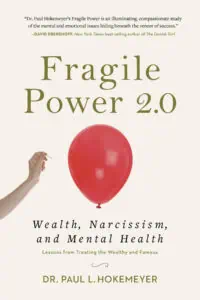
Cheryl Bohn: Dr. Paul is a licensed marriage and family therapist and author of Fragile Power: Why Having Everything is Never Enough and the newly released companion book, Fragile Power 2.0: Wealth, Narcissism and Mental Health. He is a clinical fellow at the American Association of Marriage and Family Therapists and a graduate of the Global Leaders in Healthcare at Harvard Medical School.
Suzy Shaw Welcome, Dr. Hokemeyer.
Dr. Paul Hokemeyer: Hey. It’s good to see you ladies again. Hey there.
What is Neurodiversity?
Suzy Shaw: So, Dr. Paul, can you please give us a recap of what we talked about last week before we dive into this week’s conversation?
Dr. Paul Hokemeyer: Yeah, sure. We talked about neurodiversity, the concept of neurodiversity, which honestly is new. It came into the fore at probably, I think, 1998, which is around 25 years ago. And up to that time, conditions like ADHD, dyslexia, autism, dysgraphia, were really viewed through the lens of a distinct, basically, illness. And what a researcher did in 1998, published some research that said, hold on here, wait a minute, that actually what these are, are the various diverse ways that the brain functions.
So, just like we know we live in a really diverse world where we have different genders, different colors, different races, that our brains are different, and they process information, and they process sensory information differently. And so, instead of looking at these issues as ways in which our kids are broken, let’s look at these things as ways that our kids express themselves differently. And by doing that, we’ve really, over the last 25 years, been able to change the whole trajectory of how they’re treated, and to help use these ways our kids’ neurodiversities in our kids’ brain to really help them thrive in the world.
Recognizing Early Signs of Neurodivergence
Cheryl Bohn: And last week, you touched on when you can start to see signs. If we can just recap that a little bit, when you can start to see signs in your child that indicate a neurodiversity.
Dr. Paul Hokemeyer: Really, as soon as your kid starts to be able to interact in relationships and perceive sensory information. So, some parents talked about having, they knew their kids were different because, like, lights were too bright for them. Like, they had a really negative reaction to sounds. They were really startled, like, you know, like, in a way that felt different from the way that their other kids were doing it.
And so, again, it’s based upon the brain. It’s based upon specifically the central nervous system and how our kids process sensory information in a way that’s different from the norm.
Communicating with Neurodivergent Kids
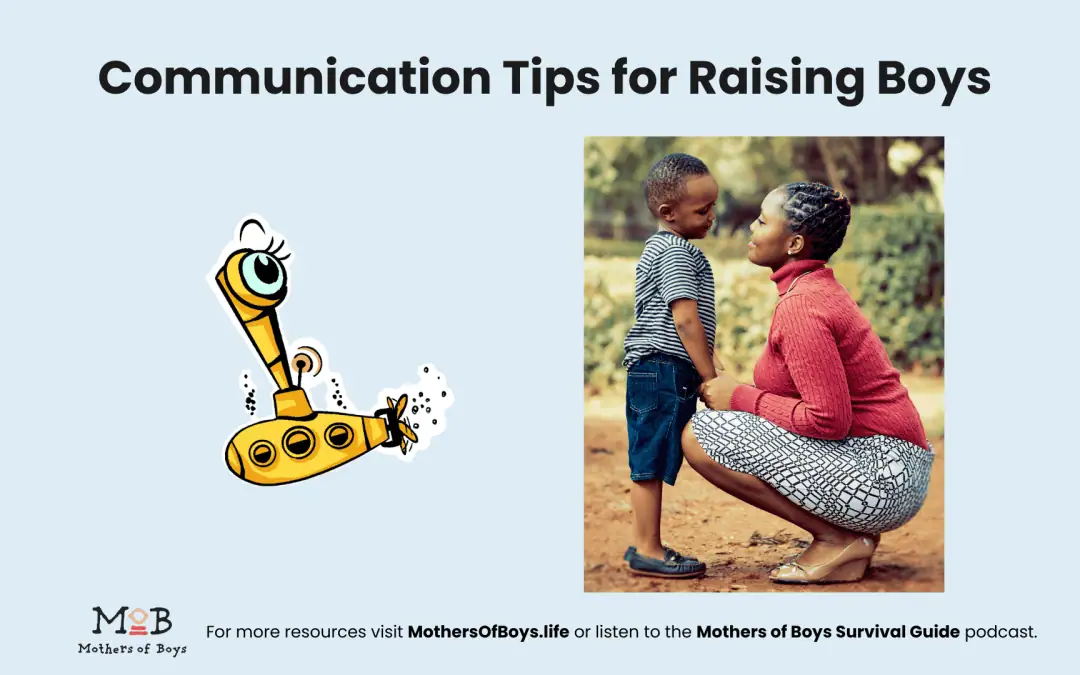
Suzy Shaw: I will add that when my kids were little, I had, I was trying to teach them that “no,” with the word no meant actually no, not something else, which is, which is Parenting 101. And it’s a really tough lesson to teach. And one of the things that I had to teach myself was to get down on their level, look at them in their eye, let them tell me whatever it is that they were trying to communicate to me. I would repeat it back to them so that they knew I heard it, and then I could still say no. And the feeling that they had, because they knew I had heard them, made them a little bit less frustrated and more willing to accept no. And that training was so significant because by the time they get to be in middle school, you’re going to be totally run over if you haven’t figured out how to say no and who’s in charge in the family. So do you have any advice for communicating more effectively with your child?
Dr. Paul Hokemeyer: I think, you know, if you have a kid, for instance, who’s autistic, right? So you’re going to have to figure out a way to communicate with the kid who, in a way that they can understand, and that’s not going to happen overnight.That’s going to come through trial and error, right? And there’s an understanding that your child is not, doesn’t have the capacity to really understand social cues in a way that’s normal.
And so what’s a different intervention that how you, how can you tell your child no in a way that, again, I think you said it so articulately, that contains, that gives them the opportunity to express themselves, but in a contained, controlled, limited way.
So honestly, you know, we all want a silver bullet, like we talked about last time. We all want a one-size-fits-all thing, but just like our kids are neurodiverse and we’re talking about diversity, the interventions, the ways to address these are going to be different and diverse for each particular kid. There are certain ground rules, right? We talked about frame, boundaries, all of that. But then there’s this gray space within those frames and those boundaries that you really kind of have to experiment and test to see what works for you.
Parenting With Emotional Awareness
Cheryl Bohn: I also felt that, you know, not making assumptions about their behavior or why they’re acting a certain way, or, you know, if they are, you know, if you don’t realize that they’re sensitive to something and then they have this overreaction, you know, really trying to understand where, what’s, what’s the underlying issue that’s causing them to react so severely. So, and, you know, really trying to get them to communicate, because I think as parents, you can make a lot of assumptions about their behavior based on your own experiences.
Dr. Paul Hokemeyer: Right.
Cheryl Bohn: So, you know, I started to get a little better at that with each child.
Dr. Paul Hokemeyer: Practice makes perfect. I don’t know whether you got to. Yeah. So, sorry about the, the, the first one always has it the hardest.
Dr. Paul Hokemeyer: So, but I also think, too, Suzy and Cheryl, you raised something that’s, that kind of made me unaware. A lot of this is managing the parental, parental anxiety around this, right?
Cheryl Bohn: Right. Yes, absolutely.
The Importance of Boundaries and Emotional Regulation
Dr. Paul Hokemeyer: God, parenting is so stressful. And there’s a saying that, you know, that I repeat frequently that, you know, “that parents are only happy as their least happy child.” And that doesn’t change, right? When your kids are screaming and, you know, out of control causes a lot of stress, right? Parents feel so responsible and so out of control. When their kids are out of control, parents feel out of control.
So, by putting these boundaries and Suzy, you’re, you, what you did in terms of saying no, but tell me why. Okay. No. I mean, that didn’t just contain your kid. It also contained you.
Suzy Shaw: Yes.
Dr. Paul Hokemeyer: So you knew, right? There was a framework for you that was like, there was a boundary for you that you were then able to be there and present for your child.
You know, they tell us when we’re in the airlines and God forbid, I’ve never had to do this, but you know, in case of an emergency, put your mask, your air mask on first before you help anybody else.
And I think parents in particular, God, it’s so easy to get pulled into the vortex of chaos and, and, and just feeling so out of control. And being able to put our air mask metaphorically, or maybe even literally, if we’re flying with our kids, is critically important.
Self-Reflection for Parents
Cheryl Bohn: I think that too, with what you’re just to kind of expand on that a little bit, I do think that it is important as a parent to have self-reflection, you know, am I doing something to contribute to this situation escalating or being more stressful? Or, you know, I, I think that that’s something that’s, you tend to hyper focus on just the child’s behavior.
Dr. Paul Hokemeyer: Yep. You do. And then you feel out of control. And then there’s so, we’re all terrified of being bad parents, right? Like don’t want to, but that’s like our greatest fear is being a bad parent. And for those who are listening to this podcast, you know, they’re listening because they want to be the best parents that they can, not because they want to be a bad parents, right?
Cheryl Bohn: Right. Right.
Dr. Paul Hokemeyer: Because they’re putting an enormous amount of pressure on themselves to be the absolute best parents that they can. And when kids are out of control, they feel out of control and they internalize the sense that, God, maybe I’m a bad, because, and then they get fatigued, right? Because it’s exhausting. And then you just sort of the spiral delves into, oh my God, I must be a bad parent, you know? And then that’s just, that’s not a productive conversation and it happens all the time.
And it’s important to be aware of when that happens and to be, that’s, that’s really when we need to step back and say, whoa, hold on here. Let’s just dial this, pump the brakes on that crazy train a little bit and dial this back a little bit and refine grounding.
Advocating for Your Child at School
Suzy Shaw: So when we were navigating school, you know, which is a big part of that whole parenting journey, I had to learn how to advocate for my child in the school system. And we had serious talks about whether we should, you know, keep them in the public school system or, you know, move them in to a school that was better suited for them. And we ended up staying in the public school system with the 504 Plan, you know, with support big, and we customized the support that was needed even with a organizational skills.
So I just called everybody a coach. So we would have, we would have somebody come to the house and help our executive functioning child that was having such a hard time, help them organize because it really wasn’t my sweet spot. I’m not really all that organized either. I couldn’t teach him how to do it. So we just had a coach. We had, we had this coach and that coach that would come in, to help fill in. So do you have any suggestions for what to do in these, you know, school settings, these, you know, social settings and activities?
Dr. Paul Hokemeyer: Yeah, I think sort of, again, slow and steady. And I think that advocacy is about joining with systems in a way where you can move together forward for a common goal. Sometimes we feel like we, these things can get a little confrontational and conflict ridden. And so keeping the temperature down and again, just being consistent and, and trying to keep your cool and talking about it in a way that doesn’t pathologize anybody, right? Doesn’t pathologize a kid, doesn’t pathologize their school, doesn’t make anybody a bad guy here, just continues to focus on what is the solution here, right?
Because again, I mean, we talked about this last week here, we live in such a problem saturated world. I’m so sick of problems, honestly, I’m like, okay, right? Like, where’s the solution in all of this? And so, you know, this, and keeping the conversation on that is, is, is critically important.
Using “Coaches” & Specialists as Stabilizers
Suzy Shaw: Mm-hmm. And sometimes we even brought in a specialist or somebody that was helping, you know, the coach, we would bring them into the school meeting to, to just help explain in a different way that could be heard better.
Dr. Paul Hokemeyer: So, so this is like, I know Suzy are very, Suzy, by disclosure, Suzy and I went to high school together. So, so we, we’ve known each other for a long time. She’s very clever back then. She’s very clever back now. Uh, and now, and so there’s something in, I’m a family therapist and there’s something called triangulation.
So, so when there’s instability in a relationship between two people, you bring in a third party to stabilize that relationship. And it’s the triangle, which is the most stable geometrical figure in the universe. And so by bringing in a coach, bringing in a third person into this relationship, stabilizes the relationship and minimizes the conflict and enables people to work through the issues, minimizing the emotional reaction to it and coming up with a solution in an objective way.
Cheryl Bohn: So that person could be a therapist or a teacher or.
Dr. Paul Hokemeyer: Could be your brother.
Balancing the Needs of Siblings
Cheryl Bohn: A brother. Okay. Yeah. Could be. Yeah. Because how some, you know, it is like we were talking about, it can be challenging if, if you do have multiple children and you have a child that is neurodivergent and maybe has some, you know, more needs possibly. And I don’t know if that’s the appropriate way to say it, but maybe is, can be more challenging with what their needs are because of that. How do you, how do you balance that with your other children and your, and yourself and your own needs?
Dr. Paul Hokemeyer: Uh, you, you do it, you balance it. How do you balance it? I think sort of develop, developing an awareness of it, of it and recognizing that your other kids are paying attention and your other kids are saying, why does my brother, kids are super competitive with each other. Right. Um, and they’re always looking to is, is your hamburger bigger than my hamburger? Is your bowl of ice cream? Do you have more ice cream than my, than I got?
Uh, and so, or mommy and daddy paying more attention to David because David’s a problem. Um, and right. And so the message they’re internalizing is, gee whiz, if I’m more of a problem, then mommy and daddy will pay more attention to me. Right. So that’s the dynamic that we’re looking at. How do we, so again, getting out of the problem into the solution, because that’s what we do here. Um, that’s what Suzy’s book’s about. That’s what this podcast is about.
The solution is really kind of working with your, your kids and having conversations with your kids about it and talking to them and saying, you know, I suspect you might feel this way. And like, can we please have a conversation around this or let’s go play a game and, you know, like, and do something and talk about it, um, and give your kids, I mean, I think Suzy’s intervention in terms of, I’m assuming it was an iPad. I don’t know about saying, taking the iPad away and saying, letting them go on, like giving them the opportunity to be heard and, and having a conversation around it.
Suzy Shaw: Do you have any, uh, resources for parents, um, for, and for their, for their child, you know, where we could go?
Recommended Resources for Parents
Dr. Paul Hokemeyer: Yeah. I mean, I think there’s some, some interesting:
- There’s a great book called Differently Wired by Debbie Reber,
- Understood.org is a great website that empowers parents.
- This is a great podcast.
- Suzy’s book is a fantastic book (Mothers of Boys Survival Guide), particularly if you’re dealing with boys.
- Tilt Parenting is another great podcast,
- and one that addresses autism in particular is mom’s talk about, Mom’s Talk Autism.
Technology & the Developing Brain
Cheryl Bohn: My kids, so I have four children and my oldest was at a time when technology, they didn’t have really iPhones. We didn’t, you know, she didn’t have an iPhone probably until maybe high school. And then my youngest is at the generation where, you know, kids were getting iPhones and using technology when they were four years old, but they weren’t getting iPhones, but they were using technology. So, I mean, can you just talk to us in general, just about the way technology is affecting our children, and their developing brain at a very young age?
Dr. Paul Hokemeyer: Yeah, sure. It’s affecting it in a very direct way. Let’s not pretend it used to be, you know, the data was that this, this, this, these, this technology is not, doesn’t have an impact on our brain, but it does.
It heightens our, it’s, it’s stimulating, it’s very stimulating, right? And it’s constantly scrolling and that gives us spurts of dopamine and oxytocin and all these, what’s called fancy word is endogenous opioids. So, it’s, yeah, right? That was a lot of good, but in any of it.
Cheryl Bohn: I’m going to throw that out to my kids? They’ll be impressed.
Dr. Paul Hokemeyer: And, you know, endogenous opioids are really good things, you know, like we want our body to produce these things, right? We love oxytocin.
Oxytocin is what mothers get after their babies are born, you know, and it enhances their, their connection that they have with the baby. It’s what we get when we hug our partner, when we hug our kids, right? We get this wonderful, warm feeling. Those are naturally produced. The technology is stimulating those. And what that does is our kids now have a higher baseline of satisfaction.
So we talk about in the realm of addiction, addiction is marked by like obsession, tolerance and withdrawal and continued use despite negative incomes, negative, negative incomes, negative outcomes. Negative incomes is a function of negative outcomes, but it’s a whole different, it’s a whole different point. And so we’re looking really at, at, you know, tolerance, right? So the more our kids use these, the earlier they have access to them, the, their baseline level of dopamine satisfaction is higher.
Replacements for Screen Time
Like when I was a kid, I would get my dopamine by running around the neighborhood and, and, you know, wrestling with my, with the kids in the neighborhood and going home and being hugged with my, by my mom and, and all that, that now our kids are getting dopamine, hopefully from those things. But in addition, now they’re getting this technology, technologically produced, by technology produced means as well. And so their baseline is higher. And as a result of having a higher baseline, their tolerance tends to then be impacted. So they need more and more of the behavior to get the same baseline level of satisfaction.
Um, and then when it becomes a problem is right. So these kids are, you know, I have a patient where these kids come into my office and they’re morbidly obese because they’ve basically been locked in their bedroom, playing video games, smoking pot and eating Doritos. So, um, so it’s, it’s, it’s looking at that and then figuring out how to intervene there, which is, you know, limiting the amount of use, right. And then getting them some exercise and then getting them some fresh air and getting them out of the world.
It’s a process because this is, you know, just snap your fingers. Uh, it just happens over time. So, um, so yeah, the technology.
Cheryl Bohn: Yeah, finding effective replacements.
Dr. Paul Hokemeyer: Effect replacements, beautifully said. Yeah.
Managing Technology in Your House
Suzy Shaw: When, when my boys were growing up, I came from a background in broadcast television. So media literacy, technology, is something I’m very drawn to and was very aware of. And probably from their perspective, I was aggressive about it. So I, I did not let them have a television in their bedroom. I struggled to get the electronics out of their room when it was time to go to bed. I used our wifi provider to identify every item device that was on our network and by person. And I would just turn it off. So it would go off at 11 o’clock. If you didn’t get your homework done, not my problem.
Um, and, uh, so, you know, the, keeping the tech, the struggle was real and it went into college even, so what other recommendations and tactics do you have besides being the aggressive tech mom that I was, do you have any other recommendations?
Dr. Paul Hokemeyer: .I like the aggressive tech mom, actually. I applaud the, I celebrate the aggressive tech mom. Um, I think also.
Cheryl Bohn: ATM. We’ll call you an ATM.
Dr. Paul Hokemeyer: There you are. We have to be aware that like there isn’t one, we just get back to what we’ve talked about in both of these podcasts where there isn’t a one size fits all. Now there are certain cases. So autistic children and other near diverse, it’s the internet can be a great place for them to find community. Right. And, and, and have a community. I think the issue is, so, so we’re not going to, we’re not going to demonize, right. We’re not going to demonize technology and, and iPads and all of this, right. That’s not going to get us anywhere. And by the way, the genie’s out of the bottle, right. This isn’t, this isn’t going anywhere.
Um, and in fact, it’s only going to become more and more central to our lives. I think the issue is in terms of, this has always been the interest in issue in parenting. Time eternal is healthy boundaries. This is like at the heart of all relational wellbeing and all individual wellbeing is having healthy boundaries with ourselves, with other people, with objects and substances in the world, and then with the world at large.
So, um, I think now more than ever having an awareness of boundaries, and just as we’re aware that the, how the quality of the food that we put into our body impacts our wellbeing, the quality of media and technology that we consume impacts our wellbeing as well.
And so there’s an enormous amount of disruption happening right now in the world. And the social order is changing. There’s an enormous amount of chaos. It’s happening super, super fast. People are feeling really ungrounded in the world. And so finding grounding in ourselves is critically important. And we do that through boundaries. So boundaries, boundaries, boundaries, boundaries.
Cheryl Bohn: Yes, that’s an important message.
Suzy Shaw: And if you were, uh, going to have a, a mantra for, for this topic for moms, um, what would it be?
Dr. Paul Hokemeyer: I think it’s, uh, I think it’s slow and steady runs the race. Really? This isn’t a sprint.
Cheryl Bohn: Yeah. A consistent, consistent and steady effort. Yep. Yeah. I love boundaries, boundaries, boundaries too. I think I’m going to like wake up and go to sleep going boundaries, boundaries, boundaries. I like that.
Well, Dr. Paul, thank you so much for joining us here today and, and sharing your insights on neurodiversity. We truly appreciate your knowledge and your expertise and the impact of your work in the field of mental health, both locally and globally is extraordinary. Your time here was just super special and we really appreciate it.
Dr. Paul Hokemeyer: So thank you again. Thank you too. It’s great seeing you and, uh, continue to do this work. It’s really, really important. And all those moms out there, keep on keeping on slow and steady, slow and steady, slow and steady.
Suzy Shaw: Well, we hope you come back and talk to us about other topics in the, in the future.
Dr. Paul Hokemeyer: Happy too.
Suzy Shaw And to find out more information about Dr. Paul Hokemeyer’s books, Fragile Power: Why Having Everything is Never Enough and the newly released companion book, Fragile Power 2.0: Wealth, Narcissism and Mental Health, as well as other podcasts and additional resources, please visit motherofboys.life. So thank you, MOB. See you soon.
Cheryl Bohn: And thank you all for joining us today. Follow the MOB on Facebook, Instagram, YouTube, and your favorite podcast platform. Be kind to yourselves, moms, and have a great week.








 Beyond his clinical work, Dr. Hokemeyer is an accomplished author and media contributor, frequently featured in outlets such as